Vice Deanship for Graduate Studies, Research, and Cultural Relations
- The Vice Deanship's Message
- Vice-Dean’s Policy
- Responsibilities of the Vice Deanship
- International Students
- Faculty of Social Work Research Plan
The Vice Deanship's Message
The Faculty Vice Dean for Graduate Studies, Research and Cultural Relations is the cornerstone of developing scientific research and implementing its strategies in graduate programs (PhD, Master's, Diploma) in accordance with quality and accreditation standards. This contributes to the academic leadership of the Faculty of Social Work at Helwan University in the field of scientific research, qualifying it to provide society with distinguished researchers capable of competing regionally and internationally and advancing society within the framework of Egypt Vision 2030.
The Vice Deanship for Graduate Studies, Research, and Cultural Relations represented by all the professors and staff members of its committees (Research Ethics, Graduate Studies, Library, and Cultural Relations), works diligently, cooperatively, and with constant dedication, seeking to advance our beloved college in the field of knowledge and scientific research. They strive tirelessly to maintain accreditation and maintain their position as a leader among faculties of social work in our beloved country and all Arab countries, ensuring that they remain a pioneer in the field of social and humanitarian work. God is the Grantor of success.
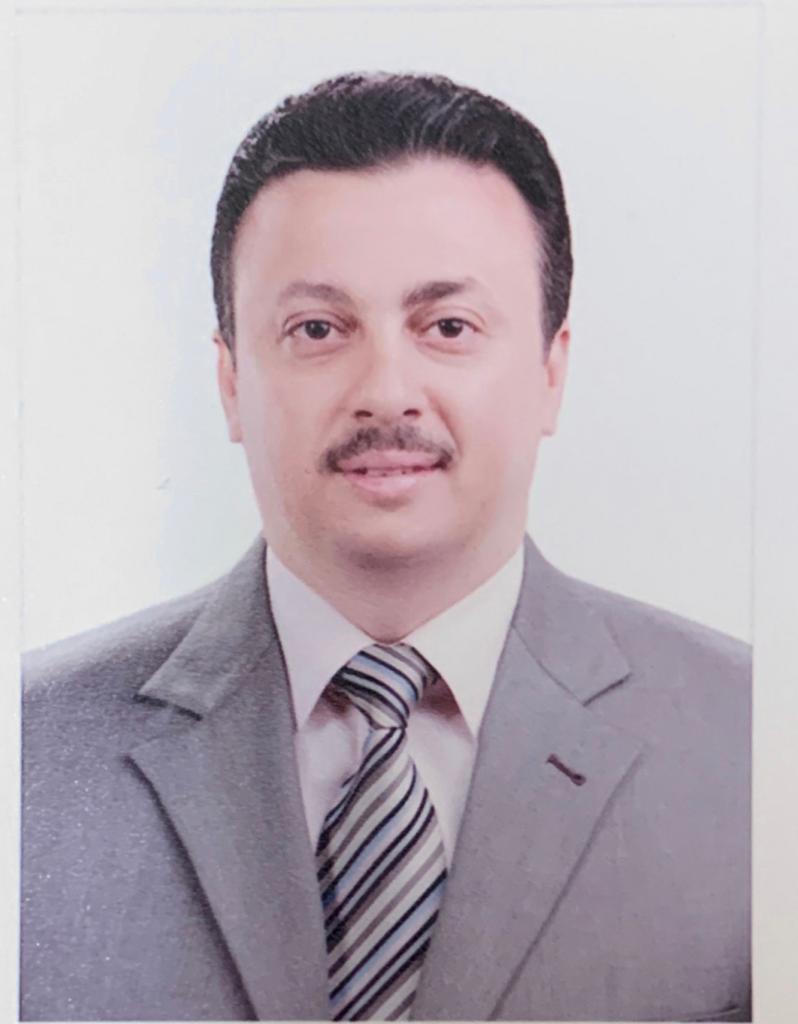
Prof. Dr. Ayman Ahmed Hassan Galalh
Vice Deanship for Graduate Studies, Research, and Cultural Relations
Faculty Policies for Graduate Studies and Research
Faculty Policies for Graduate Studies and Research
- Raising the level of scientific research among faculty members, their assistants, and graduate students.
- Training students to conduct scientific research in a manner commensurate with their abilities and capabilities, helping them transform theoretical studies in social work research courses and advanced research in their field of specialization into research skills.
- Holding online seminars (webinars) or in-person lectures addressing scientific research issues and international publication of scientific research.
- Employ scientific research in social work to study societal problems and propose scientific programs to address them.
- Link scientific research in the faculty of Social Work to various types of community institutions.
- Develop scientific publishing channels in scientific journals and electronic and printed conferences linked to databases and the knowledge bank.
- Link master's and doctoral theses and scientific research conducted by faculty members to the Egypt 2030 Strategic Plan, particularly in the areas of social and economic development.
- Develop graduate program regulations to align with the latest scientific developments and societal issues.
- Encouraging students from outside the Arab Republic of Egypt to enroll in graduate programs through the expansion of e-learning and distance learning.
- Following up on the implementation of the research plans of the academic departments and the continuous development of these plans in light of the results of their evaluation.
- Increase the number of hours of scientific research courses in graduate-level academic programs to enhance researchers' scientific research skills.
- Ensure that the faculty's graduate programs meet the highest standards of quality, adhering to program accreditation guidelines and international benchmarks.
- Participating in scientific research conducted by specialized national bodies.
- Marketing the results of scientific research into programs for use in social institutions.
- The necessity of concluding a protocol between the faculty and trusted international organizations to train graduate students.
- Providing scientific methods for addressing societal problems and achieving social and economic development goals by providing scientifically tested programs in this research, so that social workers in the field can benefit from them in their workplaces.
- Utilizing the results of scientific research to refine the textbooks provided to students by drawing on the results and experiences in scientific writing and providing models and examples.
- Encourage faculty members to include information on their research and scholarly activities relevant to the courses they teach in their curricula.
- Increasing the faculty's support for conducting outstanding interdisciplinary research.
Responsibilities of the Vice Deanship
Responsibilities of the Vice Deanship for Graduate Studies, Research, and Cultural Relations:
1. Preparing the faculty's graduate studies and research plan based on the recommendations of the department councils and relevant committees.
2. Following up on the implementation of the graduate studies and research plan in the faculty's various departments.
3. Supervising academic publishing affairs and following up on the implementation of the policy established in this regard.
4. Proposing the organization of academic conferences and seminars at the faculty.
5. Managing external cultural relations.
6. Preparing the Vice Deanship for Graduate Studies, Research, and Cultural Relations’ annual achievements for presentation at the faculty's annual conference.
7. Supervising library affairs and proposing a plan to supply it with books, references, and periodicals.
8. Forming committees to purchase the library's requirements, including the latest references and periodicals, in conjunction with the book fair.
9. Establishing cooperative relationships with all departments and divisions and other vice deans at the faculty.
10. Managing academic programs for graduate studies and the faculty.
11. Studying academic programs for graduate studies and faculty.
12. Following up on the approval of professional programs for academic departments aimed at attracting graduate students.
13. Following up on the development of curricula for graduate programs in line with community and labour market requirements.
14. Coordinating and preparing graduate study schedules for various academic departments.
15. Chairing the Vice Deanship for Graduate Studies, Research, and Cultural Relations committees and reporting their meetings to professional bodies.
16. Supervising registration retention/suspension requests, deletion and addition processes, and debarment lists in accordance with the regulations and decisions issued in this regard.
International Students
Required Documents for Applying for Graduate Studies for International Students:
1. The student logs into the Ibn Al-Haytham Graduate Studies Department website: http://pgs.helwan.edu.eg
2. Select "Apply for Graduate Studies."
3. The student then enters their national ID number or passport number and email address. A password is sent to the student's email address to access their registration information.
4. The student enters the login information sent to their email address and selects "Applying for Graduate Studies."
5. The student then completes all required information and awaits the acceptance results.
6. A video is attached explaining how to access the website.
Required Documents:
1. The student's original or provisional certificate (bachelor's) and an accredited four-year certificate with a grade of at least "Good" for Master's applications.
2. (PhD) The student's original or provisional master's certificate and its equivalent (and a copy of the master's thesis for those who obtained their master's degree from outside the Faculty of Social Work, Helwan University).
3. Approval from their employer for enrolment or a declaration that they are unemployed.
4. The original birth certificate or an official extract thereof.
5. Military service certificate for male students.
6. Students who have obtained a Bachelor's degree in Social Work from a private institute must provide proof that the Supreme Council of Universities has recognized their institute's Bachelor's degree with a Bachelor's degree in Social Work awarded by Egyptian universities (equivalency of a Bachelor's degree from the Supreme Council of Universities).
7. A certificate of good conduct.
All submitted documents (original documents + 2 photocopies + a passport copy).
Faculty of Social Work Research Plan
Faculty of Social Work Research Plan
Goals and Objectives:
The faculty's research plan includes the following objectives:
The faculty's research plan includes the following objectives:
- Raising the level of scientific research among faculty members, their assistants, and undergraduate and graduate students to improve the quality of education and enable effective participation in helping in solving societal problems.
- Providing specialized training for undergraduate students on how to conduct scientific research in a manner consistent with their academic and scientific capabilities, and transforming theoretical knowledge into applied research skills that support their critical thinking in the field of social work.
- Achieving the effective use of scientific research in the field of social work as an analytical tool for understanding societal problems, addressing these problems, and achieving sustainable development.
- Deepening the relationship between scientific research in the Faculty of Social Work and the local community by conducting field research in various community institutions and with individuals from diverse social, cultural, and educational groups, thus enhancing the application of research findings to improve societal reality.
- Developing scientific research methods and programs that contribute to solve societal problems and achieving social and economic development goals, thus improving the professional performance of social workers.
- Investing the results of scientific research in developing and updating curricula and academic references provided to students, thus contributing to the development of academic and professional knowledge in the field of social work.
Timeline for Implementing the Research Plan:
The faculty’s research plan is linked to the timeline of the five-year strategic plan (2024-2029 AD), which is linked to successive social and economic changes as a guide for the plan during its implementation period.
Basic Strategy for Research in Social Work:
Within the framework of the faculty’s orientations, the nature of its specializations, and the fields of work of the social worker, who represents its output and primary goal, and within the framework of the faculty’s mission and objectives, the faculty has identified its research fields according to the following axes:
- Contemporary problems and phenomena.
- Caring for special groups in society.
- The field of family.
- Women's empowerment.
- Practice based on modern technology.
- Service Quality.
- Evaluation and Measurement.
- Addiction
- Information Technology and Artificial Intelligence
- Studying Groups in the Context of Recent Societal Changes
- Presidential Programs, Projects, and Initiatives
- Quality in Group Work
- Environment
- Women
- Family and Childhood
- Professional Training and Supervision
- Delinquency and Crime
- Creativity and Innovation
- People with Disabilities
- Sustainable Development
- Refugee Groups
- Youth Care
- Illegal Immigration
- Entrepreneurship
- Social Marketing
- Orphan Care
- Speech Therapy and Autism
- Schools
- Volunteering
- Interdisciplinary Studies in Group Work
- Education Issues and Practice in Group Work
- Quality of Education and Practice in Programs for Working with Organizations and Communities
- Working with High-Risk Areas, Social Security Issues, and Emerging Crimes
- Networking between Social Work Education and Practice Institutions.
- Localizing foreign social work models and practices in light of local circumstances and conditions.
- International social organizations and international social work.
- Issues and problems facing the social work profession and social workers, and developing professional development programs at the community and policy levels.
- Working with communities and organizations and contemporary societal issues.
- Using information technology in social and development projects (community organizing and digital transformation).
- Evaluating professional intervention efforts and programs with organizations and communities.
- Cost-benefit analysis of social programs and projects.
- Developing strategies, mechanisms, and tools for working with organizations and communities.
- Ethics of the social organizer in working with organizations (governmental, civil, and private).
- Capacity building (organizations, communities, and vulnerable groups) and working with organizations and communities.
- Focusing on the problems and issues of local communities.
- Popular and community participation efforts in Egyptian society.
- Interdisciplinary studies and development of Egyptian society.
- Working with organizations and communities and developing newly established urban areas (professional intervention in how to work with communities and organizations with smart cities).
- Social Research Marketing
- Incentivizing Applied Scientific Research and International Publication
- Working with Organizations, Communities, Entrepreneurship, and Social Innovation
- Social Investment and Social Plans and Programs
- Building a Model for Analysing Social Care Plans
- Evaluating Social Care Strategies
- Social Planning Strategies
- Sustainable Development Strategies
- Strategic Planning and Competitive Advantage
- Effectiveness of National Projects
- Economic and Social Returns
- Digital Citizenship
- Environmental Citizenship
- Private Sector Social Responsibility
- Social Planning and Environmental Issues
- Social Care Plans and Programs in Light of Quality Standards
- Building Models for Evaluating Plans and Programs
- Planning Maps
- Planning Decision-Making
- Planning Agencies in Light of Digitization
- Professional Development for Social Planners
- Social Protection Plans and Programs
- Building Models for Assessing Community Needs
- Social Planning and Quality of Life
- Social Planning and Entrepreneurship
- Social Justice
- Social Rights and Eligibility Criteria
- Virtual Communities and Issues of Egyptian Society
- Priorities of Social Work Under Current Circumstances
- Developing Development Strategies.
- The social dimension and building fourth-generation cities
- Building a model for analysing social welfare policies
- Addressing the social dimension in urban policies
- Analysing social welfare policies in various fields to develop alternative policies.
- Evaluating social welfare policies
- Investment policies in the field of social welfare plans
- Managing human capital in the knowledge age
- Innovative digitization
- Planning leadership competencies
- Managing crises, disasters, and risks in the context of information technology
- Intellectual capitals
- Environmental governance
- Institutional agility
- Family field
- Childhood field
- Special groups field
- Environmental protection and development field
- Social defence field
- Elderly field
- Youth field
- Education field
- Workers care field
- Medical field
- Development of slums and new communities
- Social work education field
- Social work field in the military field
- Social work field in tourism
Helwan University strives to be a leading educational and research institution in technology and the arts, and excels in education and sciences according to international quality standards
Important Links
- Visits 5074