Department of Working with Communities and Organizations
- Department Chair's Message
- Vision of the Department
- Mission of the Department
- Department Objectives
- Faculty Members
Department Chair's Message
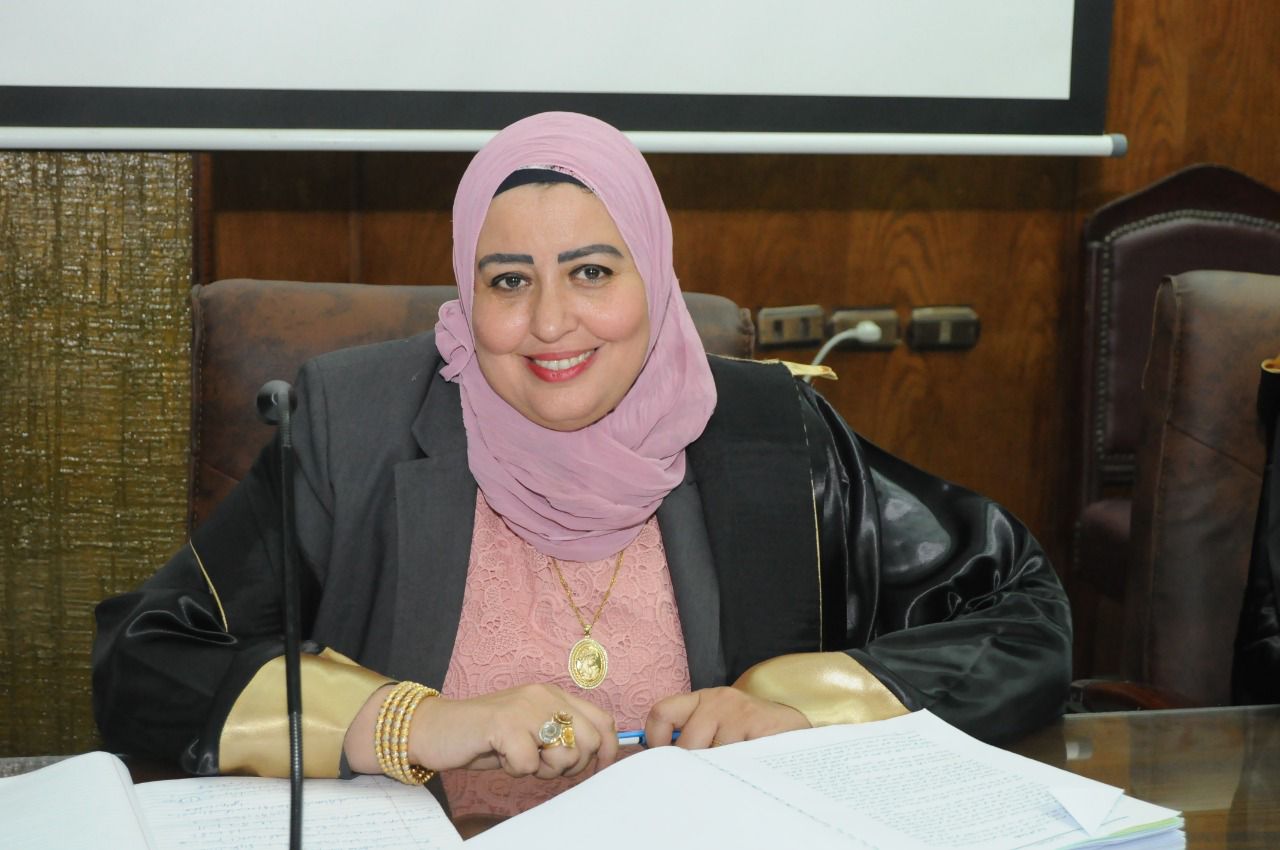
The Community Organization Department is one of the most prestigious departments in the Faculty of Social Work at Helwan University. Reviewing the names of its members over the years reveals prominent scholars and distinguished academic departments. This has expanded to include community organization departments in social work institutes and colleges, where many have graduated with master's and doctoral degrees and have become a core of their successful and competent work. This has been facilitated by the fact that many members of the golden generation have assumed leadership positions, which has facilitated subsequent advancement, the development of regulations, and other benefits. Community organization is an important requirement for providing social welfare services in various forms through various institutions and organizations. The method assists organizations and communities through five sub-methods or five aspects:
- Coordination or collaboration between various social welfare organizations to prevent duplication and repetition and to ensure the integration of services.
- Planning, which is the second aspect of assistance, involves identifying goals, needs, and resources, and aligning resources and meetings.
- Local development is the third aspect of assistance, focusing on motivating citizens to participate, rejecting negativity, and embracing positivity to help them solve their own problems in the future. This was demonstrated by the distinguished experience of Professor Mohamed Shalaby.
- Social work is the fourth aspect of assistance, focusing on achieving social justice, redistributing resources, and supporting oppressed groups.
- Working with the organization's community is the fifth aspect, through professional engagement with the organization's components and its own community to provide services.
In recent times, and with the attainment of academic accreditation, the department has witnessed significant developments, including the development of a research plan, the preparation of course files and descriptions, the preparation of special educational programs and course reports, quality committees, the development of many department activities, and an emphasis on providing modern technological means for use in the educational process. I believe that the future requires collective and individual efforts from the department's members to develop and implement what has been achieved theoretically into practice. This can be achieved through a focus on participation in local and national projects and initiatives, training undergraduate and graduate students, and supporting staff, including assistant professors and teaching assistants, as well as the department's young faculty members. Indeed, this is a wealth of experience that is difficult to obtain from books. Perhaps it will help us achieve a purely Egyptian professional model or a theory of practice that considers the culture of Egyptian society. Finally, I would like to thank all department members for their distinguished efforts to develop the department and ensure the quality of the educational, professional, practical, and administrative process.
Head of Community Organization Department
Prof. Dr. Nevin Abdel Moneim Mohamed Ibrahim
Vision of the Department
"To be a leading regional department in empowering communities and building their capacities, through innovative professional practice and applied scientific research, to achieve sustainable development and social justice within the framework of a knowledge society and digital transformation."
رسالة القسم
"The Department of Community Organization at Faculty of Social Work, Helwan University, seeks to prepare distinguished and competitive social workers capable of leading positive social change. This is achieved by providing advanced educational programs and applied scientific research focusing on community and organizational issues, fostering strategic partnerships with various stakeholders, and utilizing innovative digital transformation-based approaches to deliver sustainable solutions that serve the needs and developmental aspirations of Egyptian society."
Department Objectives
Proposed Strategic Objectives for the Department
1) Developing Educational Programs:
- Updating and developing curricula and academic programs (bachelor's and postgraduate) to include the latest theories and practices in community and organizational work, with a focus on sustainable development and digital transformation.
- Preparing highly qualified graduates capable of competing in the local and regional labor markets and possessing the ability to lead positive social change.
- Integrating specialized courses in digital social work, social data analytics, and social entrepreneurship to enhance students' capabilities in using technology for community interventions.
2) Enhancing Applied Scientific Research:
- Conducting innovative applied scientific research focused on identifying and addressing pressing societal issues and challenges in Egypt, in line with Egypt's Vision 2030 and the Sustainable Development Goals.
- Publishing research in prestigious scientific journals, both nationally and internationally, and contributing to the production of advanced knowledge in the field of community and organizational work.
- Directing research to provide practical and sustainable solutions for societal problems and supporting decision-makers with evidence-based information and analyses.
3) Activating Community Participation and Partnerships:
- Fostering strategic partnerships with government institutions, civil society organizations, the private sector, and international organizations to implement joint community development projects.
- Actively participating in presidential and national initiatives aimed at community service and development and contributing to the achievement of comprehensive development goals.
- Providing specialized consultations, training, and services to communities and organizations to empower them, build their capacities, and enhance social capital.
4) Supporting Digital Transformation and Innovation:
- Adopting and applying innovative methods based on digital transformation in all aspects of the department's academic, research, and community work.
- Developing the department's technological infrastructure to support a smart learning and research environment and fostering innovations in the field of social work.
- Encouraging faculty members and students to use digital tools and technological platforms in their professional and research practices to increase effectiveness and impact.
5) Developing Institutional and Human Capacities:
- Providing continuous professional development opportunities for faculty members and their assistants in the latest specializations and practices in community and organizational work, including digital skills.
- Encouraging international cooperation and knowledge exchange with similar departments and institutions worldwide to enhance the department's standing and leadership.
- Building a collaborative and integrated team characterized by empathy and ethical practice, capable of working effectively within a multidisciplinary approach.

Helwan University strives to be a leading educational and research institution in technology and the arts, and excels in education and sciences according to international quality standards
Important Links
- Visits 5077